Why Cravings and Emotional Eating Are Not Making You Less Spiritually Mature
Many people believe cravings are a spiritual failure. If I were more disciplined, I wouldn’t want this.
If I were more healed, I wouldn’t reach for that. If I trusted God more, my body wouldn’t pull so hard.

Cravings are not evidence of spiritual immaturity.
So cravings and emotional eating get moralized and people carry the stigma and try to sort their past or cast the sugar demon out or find a program that will strengthen their will so they can resist with the full force instead of living in between temptations to which they give in.
But cravings are not evidence of spiritual immaturity. They are a signal. And often, they are the language of a body that has been trying to survive faithfully under strain.
The Body Does Not Speak in Virtues and Vices
Your body does not think in moral categories. It ‘thinks’ in needs, safety, fuel, and regulation. It wants to stay in the optimal harmonious state and if something is missing, it wants to tell you loudly about it.
When blood sugar drops, it asks for quick energy. When the nervous system is overwhelmed, it seeks soothing. When sleep is fragmented, hormones signal for stability. None of this is rebellion against the spiritual life. It is physiology doing exactly what it was designed to do. The problem begins when we interpret biological signals as character flaws.
Cravings do not mean you lack self-control. They mean something in your body is in need.
Cravings Often Appear After Sacrifice, Not Sin
Many people experiencing intense cravings are not indulgent. They are disciplined and generous.
They are fasting, they skip meals to serve others. They override hunger to stay productive or ignore fatigue because responsibility demands it.
And the body eventually responds. Cravings are often the echo of long obedience without replenishment. That is not spiritual immaturity. That is a system compensating for depletion. You body might want quick fix in a donut which will replenish emotional need and temporary energy demand.
Virtue Does Not Require Stress
There is a subtle lie many sincere Christians absorb: That holiness should feel like constant resistance. But the fruit of the Spirit does not emerge from chronic stress. Self-control born from dysregulation breaks under stress. True temperance arises when the nervous system is regulated enough to choose, not just resist.
A body that feels safe can wait. A body that feels threatened reaches for a cake, cookie, chips. Cravings do not make you less holy. They often reveal how long you have been carrying more than your can.
When cravings and emotional eating are met with shame, including self-shame, the cycle intensifies. Shame activates the stress response. Stress increases cortisol. Cortisol destabilizes blood sugar. Instability strengthens cravings. Then we spiritualize the loop: “I failed again.” But what failed was not virtue. What failed was interpretation. A regulated nervous system lowers cravings not by force, but by fulfillment.
Spiritual Maturity Includes Listening to the Body
The Incarnation matters here. God did not bypass the body. He entered it. Which means bodily signals are not obstacles to holiness, they are part of the terrain of formation. Spiritual maturity includes the ability to discern:
When desire is about comfort rather than communion
When hunger is literal, not symbolic
When the body needs fuel before the soul can focus
Ignoring the body does not make us spiritual. It makes us fragmented and it can lead to over-spiritualizing reality.
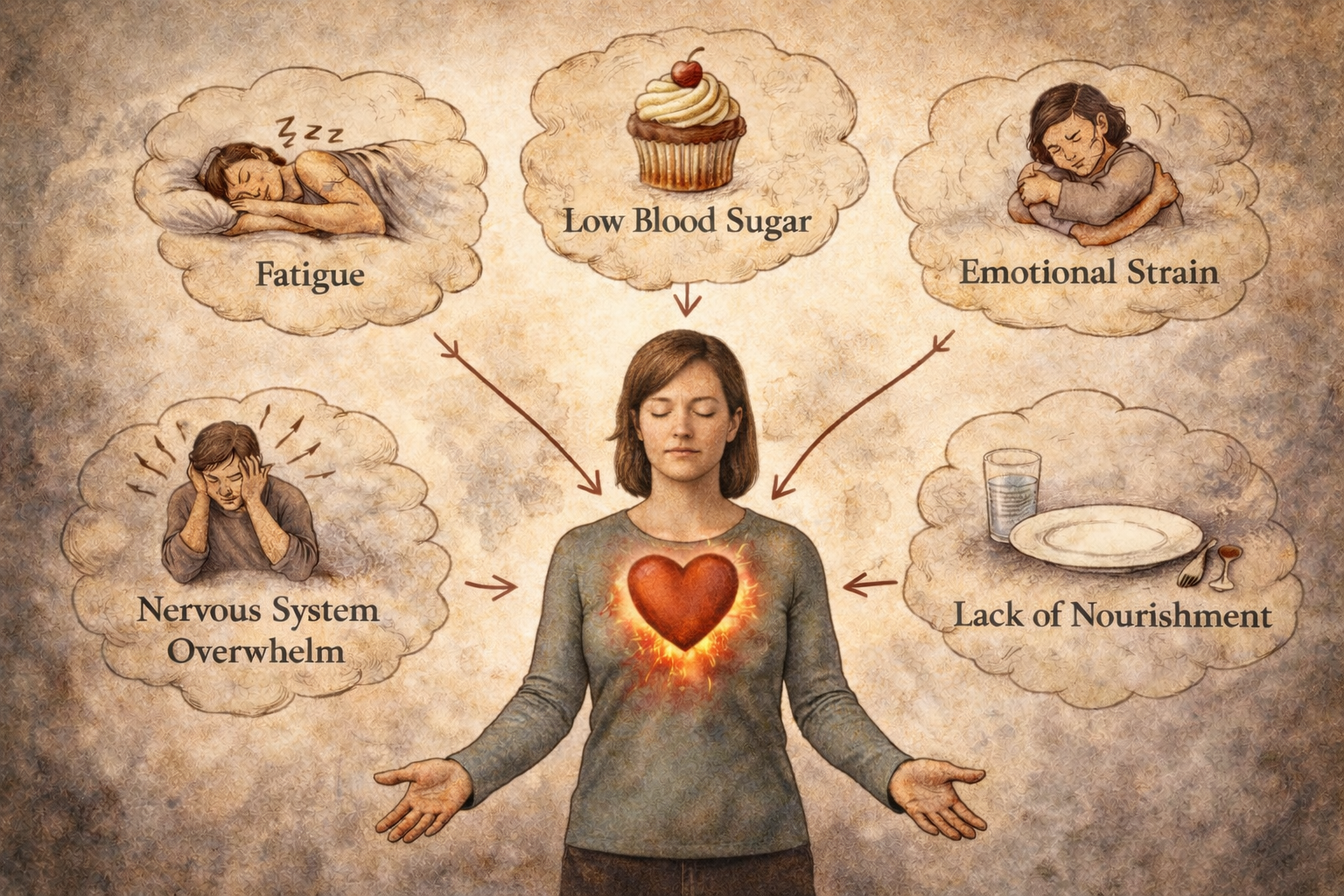
Your body craves various foods for different reasons.
What Cravings Are Actually Asking
Often, cravings are not asking for more willpower. They are asking for:
Regular nourishment with protein and minerals
Predictable rhythms with rest without guilt
Emotional safety with permission to receive grace form God and others
Meeting those needs does not weaken virtue. It stabilizes the ground where virtue can grow.
A spiritually mature response to cravings is not condemnation. It is curiosity: What am I depleted in? What has been demanded of me lately? What kind of rest have I postponed? What nourishment have I spiritualized away?
Do you know that cravings soften when they are heard and being understood? More so when they are indulged blindly or suppressed harshly.
If cravings have intensified during healing, prayer, or deeper commitment, it does not mean you are moving backward. Often it means your body finally feels safe enough to speak. And listening to them without shame is not spiritual compromise. It is the beginning of reverence to your body that is sending the signals to your heart.
Because grace does not arrive only in discipline. Sometimes it arrives as bread.
Emotional Eating
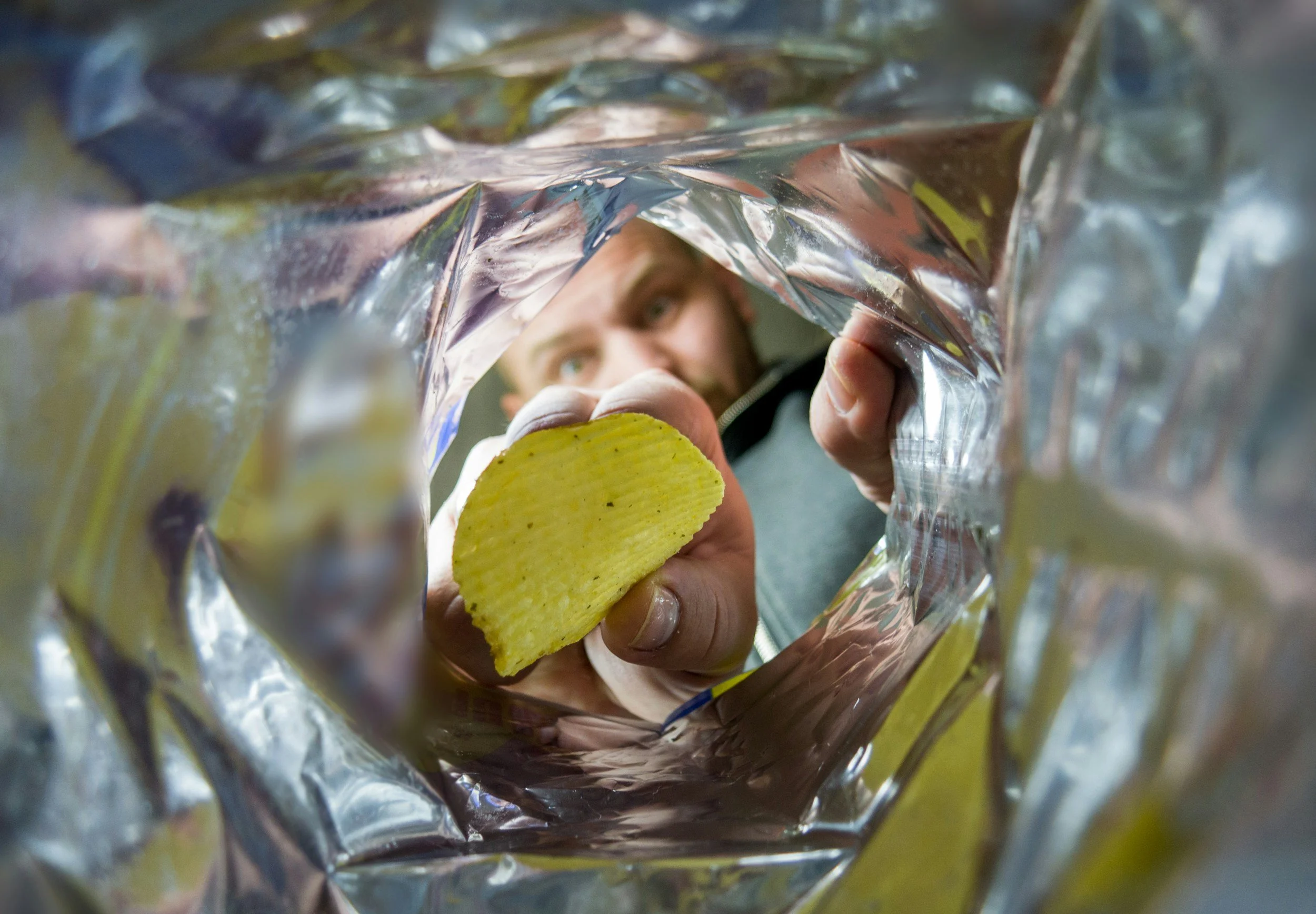
Emotional eating is rarely about emotion alone. It is about unmet needs paired with high responsibility.
Emotional eating happens when emotion has nowhere else to go. The nervous system is always seeking regulation so when comfort, safety, rest, or reassurance are unavailable in relationship, prayer, rhythm, or rest, the body looks for the fastest substitute. Food becomes a mediator. Not because it is sinful but because it is available and reliable.
Warmth lowers threat. Sweetness raises dopamine. Fullness signals temporary safety.
It is a body trying to settle itself with the tools it has access to.
Emotional eating is rarely about emotion alone. It is about unmet needs paired with high responsibility. Many people who struggle with emotional eating are not out of control. They are controlled everywhere else. They hold it together publicly, they keep it all together for others, they postpone acknowledging their own signals until the day is done.
And then the body speaks. Cravings arise not because prayer failed, but because the nervous system has been overextended without repair. When emotion is allowed, named, felt, prayed through, shared, metabolized, the intensity of cravings often softens on its own because the body was no longer carrying the emotion alone.
Healing emotional eating does not begin with “trying harder.” It begins with asking: Where have I asked my body to carry what should have been shared, rested, or held by God?
Learning to read cravings with compassion rather than suspicion is one of the best spiritually mature things a person can do.
Questions Worth Sitting With This Lent
Before trying to fix your cravings, before resolving to be “more disciplined” or before adding another rule to an already overburdened life, pause and ask:
What if my cravings are not temptations to conquer, but messages to discern?
What has my body been compensating for quietly while I kept showing up faithfully?
Where have I mistaken depletion for lack of virtue?
What would happen if Lent became a season of restoration rather than endurance?
How might my prayer change if my nervous system felt safe enough to receive?
What if healing my relationship with food also healed my relationship with God?
And perhaps the most unsettling question of all: What if the thing I’ve been judging in myself is actually where grace is trying to enter?
This Lent is not about stricter control. It is about right order of body, soul, and spirit learning to listen again.
If you sense that your cravings, fatigue, or restlessness are not moral failures but invitations to deeper healing, you are not alone and you are not late. You are exactly where discernment begins.
Join Lent 2026 HARMONY at the TABLE - Healing Emotional Eating Without Shame to understand the difference between emotional eating and gluttony, cravings and hunger from a moral, spiritual and physiological perspectives and to start healing your body, soul and spirit. A guided journey into embodied prayer, nervous-system repair, and healing the places where discipline alone has never been enough.